Author: Certified Ka-Trabaho Abie

  • Experience 302 – Advanced Skills and Certifications for High-Demand Jobs

    Many Filipino workers feel stuck sa parehong position for years. Some want to shift careers, others want a promotion, pero walang clear path.

    Here’s the truth: Without advanced skills or recognized certifications, mahirap makasabay sa mga bagong job opportunities.

    The good news? You don’t need to start from zero. By gaining the right advanced skills and certifications, you can qualify for high-demand jobs, shift careers, or move up the ladder.

    • Promotions require proof of growth, not just tenure.
    • Career shifts are easier if you have certificates that employers recognize.
    • Employers trust candidates with both experience + certification badges.

    Below are the 16 job clusters. For each, you’ll see sample jobs, advanced skills, exact certificate titles, and where to upskill.

    1. Information Technology (IT) & Digital Careers

    Perfect for employees shifting from traditional roles into tech-driven jobs.

    • Sample Jobs: Software Developers, Data Analysts, Cybersecurity Specialists, Cloud Engineers, AI/ML Specialists
    • Skills must have: Programming, Data Analytics, Cloud Computing
    • Certifications you can take:
      • AWS Certified Developer – Associate
      • Google Associate Cloud Engineer
      • Microsoft Certified: Azure Fundamentals
      • CompTIA Security+
      • Cisco Certified Network Associate (CCNA)
    • Where to Upskill: TESDA ICT programs, DICT Digital Jobs PH, AWS Training, Coursera, Udemy

    2. Business Process Outsourcing (BPO) & Global Services

    Still one of the strongest industries in PH.

    • Sample Jobs: CSR, Technical Support, Quality Analysts, Workforce Specialists, Team Leaders
    • Skills must have: Communication, Data Management, Leadership
    • Certifications you can take:
      • Certified Customer Service Professional (CCSP)
      • Six Sigma Yellow Belt (Process Improvement)
      • ITIL Foundation Certification
    • Where to Upskill: TESDA Contact Center Services NC II, LinkedIn Learning, BPO corporate training programs

    3. Healthcare & Allied Services

    Healthcare workers are in-demand locally and abroad.

    • Sample Jobs: Nurses, Medical Technologists, Medical Coders, Caregivers
    • Skills must have: Patient Care, Medical Coding, Digital Health Systems
    • Certifications you can take:
      • TESDA Caregiving NC II
      • Basic Life Support (BLS) & Advanced Cardiovascular Life Support (ACLS) – American Heart Association
      • Certified Professional Coder (CPC by AAPC)
    • Where to Upskill: TESDA, PRC-accredited seminars, AAPC online, Red Cross Philippines
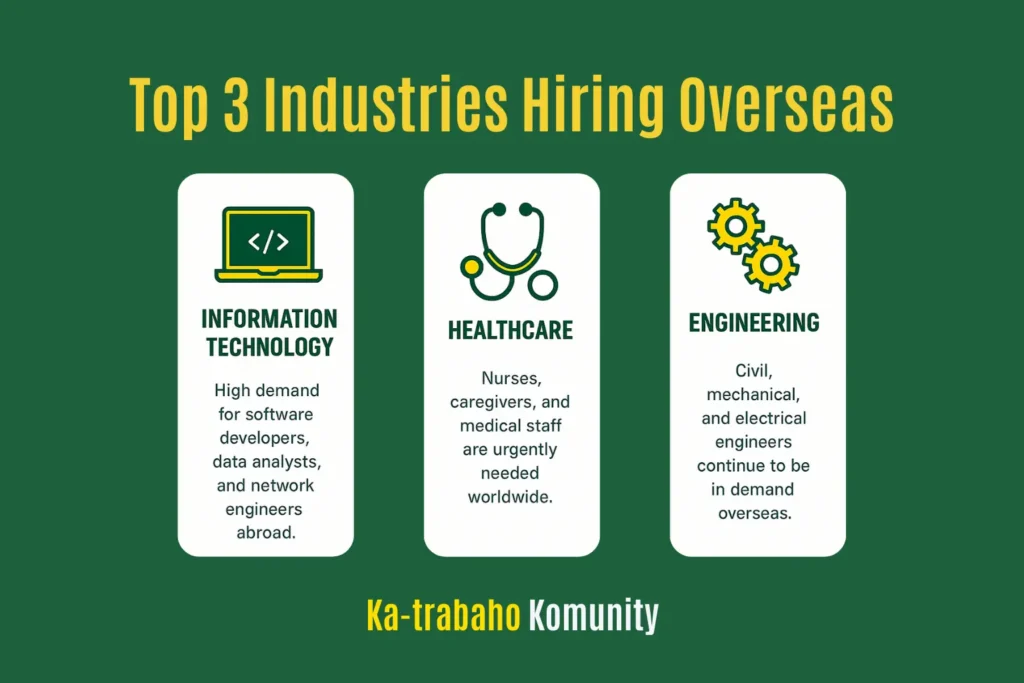
    Top 3 Industries - Experience 302 – Advanced Skills and Certifications for High-Demand Jobs

    4. Engineering & Technical Fields

    High demand in construction, infrastructure, and renewable energy.

    • Sample Jobs: Civil, Mechanical, Electrical Engineers, Renewable Energy Technicians
    • Skills must have: Project Management, AutoCAD, Renewable Energy Systems
    • Certifications you can take:
      • PRC Engineering Licensure (with CPD units)
      • Autodesk Certified Professional (AutoCAD)
      • Lean Six Sigma Green Belt
    • Where to Upskill: PRC seminars, TESDA AutoCAD training, Coursera, engineering review centers

    5. Education & Training

    The shift to online learning keeps teachers and trainers in demand.

    • Sample Jobs: Licensed Teachers, ESL Teachers, Corporate Trainers
    • Skills must have: Instructional Design, Digital Teaching, Leadership
    • Certifications you can take:
      • LET (Licensure Examination for Teachers)
      • TESDA Trainer’s Methodology I & II
      • TESOL/TEFL Certification
    • Where to Upskill: PRC, TESDA, British Council, Coursera

    6. Finance & Business Careers

    Strong demand in both corporate and startup sectors.

    • Sample Jobs: Accountants, Auditors, Financial Analysts, Compliance Officers
    • Skills must have: Financial Analysis, Risk Management, Business Reporting
    • Certifications you can take:
      • CPA (Certified Public Accountant) Board Exam
      • CFA (Chartered Financial Analyst)
      • SAP Financial Accounting Certification
      • QuickBooks Certified User
    • Where to Upskill: PRC, CFA Institute, SAP Training Centers, TESDA Bookkeeping NC III

    7. Sales & Marketing

    Every business needs good sellers and marketers.

    • Sample Jobs: Digital Marketers, Sales Managers, Brand Specialists, Content Creators
    • Skills must have: SEO, Digital Advertising, E-commerce Strategy
    • Certifications you can take:
      • Google Ads Certification
      • Meta (Facebook) Blueprint Certification
      • HubSpot Content Marketing Certification
    • Where to Upskill: Google Skillshop, Meta Blueprint, HubSpot Academy, TESDA Digital Marketing NC II

    8. Creative & Multimedia

    Driven by content creation and design demand.

    • Sample Jobs: Graphic Designers, Video Editors, UI/UX Designers, Game Developers
    • Skills must have: Design, Animation, UI/UX Principles
    • Certifications you can take:
      • Adobe Certified Professional (Photoshop, Premiere Pro)
      • Unity Certified Associate (Game Development)
      • Google UX Design Certificate
    • Where to Upskill: TESDA Visual Graphics NC III, Adobe Academy, Coursera

    9. Logistics, Supply Chain, & E-commerce

    Growing as e-commerce expands.

    • Sample Jobs: Supply Chain Analysts, Logistics Managers, Warehouse Supervisors
    • Skills must have: Inventory Management, Data Analytics, Process Improvement
    • Certifications you can take:
      • Certified Supply Chain Professional (CSCP by APICS)
      • Lean Six Sigma Green Belt
      • SAP Logistics Execution Certification
    • Where to Upskill: TESDA Warehouse Services, SAP Training, APICS, LinkedIn Learning

    10. Green & Sustainable Jobs

    The future is green energy and sustainability.

    • Sample Jobs: Environmental Engineers, Sustainability Officers, Agritech Specialists
    • Skills must have: Renewable Energy, Environmental Compliance, Sustainable Agriculture
    • Certifications you can take:
      • TESDA Solar PV Installer NC II
      • Certified Sustainability Professional (ISSP)
      • LEED Green Associate (Building Design)
    • Where to Upskill: TESDA Green Jobs programs, ISSP online, LEED Training

    11. Hospitality & Tourism

    Still strong as travel rebounds.

    • Sample Jobs: Chefs, Hotel Managers, Guest Relations Officers
    • Skills must have: Culinary Arts, Tourism Management, Guest Service
    • Certifications you can take:
      • TESDA Cookery NC II / Bread & Pastry Production NC II
      • ServSafe Food Protection Manager
      • Certified Hospitality Supervisor (CHS)
    • Where to Upskill: TESDA, local culinary schools, AHLEI programs

    12. Agriculture & Agribusiness

    Modern agritech is creating new career paths.

    • Sample Jobs: Agronomists, Food Technologists, Fisheries Technicians
    • Skills must have: Agribusiness Management, Food Processing, Smart Farming
    • Certifications you can take:
      • TESDA Organic Agriculture Production NC II
      • HACCP (Food Safety Management)
      • Fisheries NC II
    • Where to Upskill: TESDA Agri programs, DA training centers, private agritech seminars

    Demanded in corporate and government sectors.

    • Sample Jobs: Compliance Officers, Paralegals, Legal Researchers
    • Skills must have: Legal Writing, Compliance, Contract Management
    • Certifications you can take:
      • Philippine Bar Exam (for Lawyers)
      • Certified Compliance & Ethics Professional (CCEP)
      • Paralegal Studies Certificate
    • Where to Upskill: Law schools, Ateneo Legal Studies, LinkedIn Learning

    14. Human Resources (HR)

    Key in employee growth and company performance.

    • Sample Jobs: Talent Acquisition Specialists, HR Business Partners, Employee Relations Officers
    • Skills must have: Recruitment, Employee Engagement, HR Analytics
    • Certifications you can take:
      • SHRM Certified Professional (SHRM-CP)
      • People Management Association of the Philippines (PMAP) HR Certifications
      • LinkedIn HR Analytics Certificate
    • Where to Upskill: PMAP, SHRM Global, LinkedIn Learning

    15. Government Careers

    Stable demand across agencies.

    • Sample Jobs: Civil Engineers, Statisticians, Social Workers, Administrative Officers
    • Skills must have: Policy Knowledge, Governance, Public Service Management
    • Certifications you can take:
      • Civil Service Examination (Professional & Sub-Professional)
      • Project Management Professional (PMP)
      • Certified Public Manager (CPM – NCPAG UP)
    • Where to Upskill: CSC, DAP, UP NCPAG, TESDA

    16. Manufacturing & Skilled Trades

    Critical for industrial growth.

    • Sample Jobs: Welders, Machinists, CNC Operators, Production Supervisors
    • Skills must have: Welding, CNC Programming, Machine Maintenance
    • Certifications you can take:
      • TESDA Welding NC I–III
      • CNC Lathe Machine Operation NC II
      • TESDA Mechatronics NC II
    • Where to Upskill: TESDA, Technical Training Centers, Industry programs
    1. Align with your career goal (promotion or shift).
    2. Check job postings — see what certifications are most requested.
    3. Consider time, cost, and ROI before enrolling.
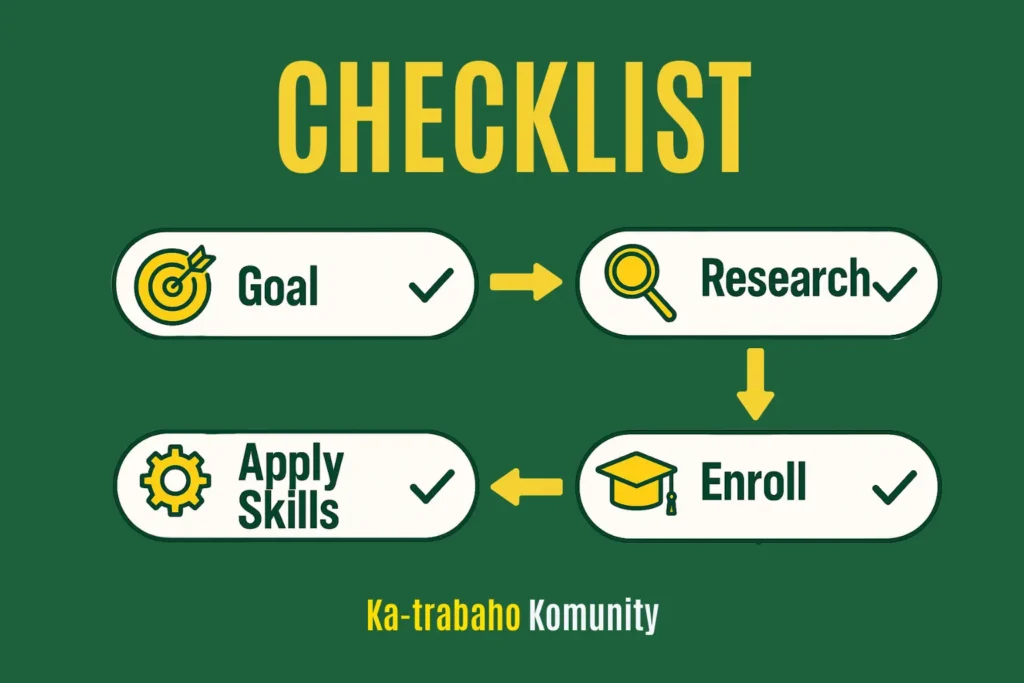
    Checklist: Experience 302 – Advanced Skills and Certifications for High-Demand Jobs

    Upskilling is not an expense — it’s an investment in your future. Whether you want to be promoted or start fresh in another industry, the right skills and certifications open doors.

    Trust us — we’ve been the job seeker and the recruiter. Kaya alam naming these steps are proven.

    Don’t just wait for the opportunity. Prepare for it.

    Join Us. Grow With Us. Ka-Komunidad Mo Kami.

    ✅ Subscribe to our Newsletter

    Stay updated with new job tips, free templates, kwentos from real KaTrabahos, and upcoming events.
    No noise. Just real help.

    Join Our Facebook Group

    Real-time conversations, questions, kwentuhan, and job alerts — kasama ang buong Komunidad.

    Submit Your Story or Tip

    Your voice might be the sign someone else is waiting for. Share your experience — it matters.
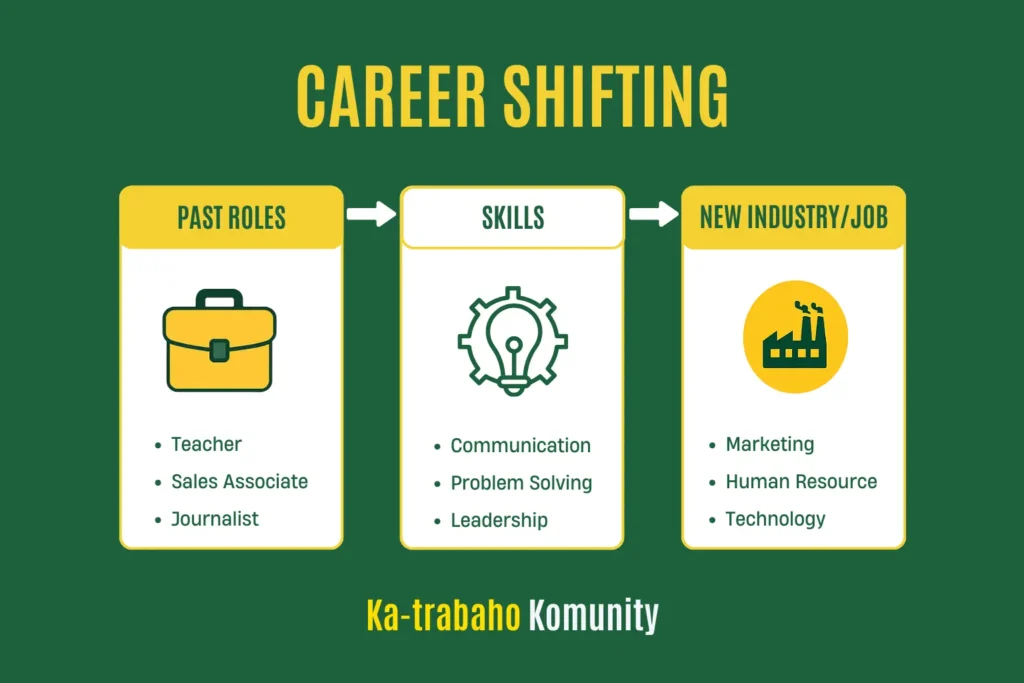
  • Experience 301 – Using Past Roles to Shift Job : Confidently!

    Stuck in the same role for years? Parang feeling mo hindi ka na nag-gro-grow, pero natatakot kang mag-shift kasi baka walang tatanggap?

    It’s normal. Many Filipinos feel trapped in jobs na hindi na bagay sa kanila. Pero mahirap mag-decide lalo na kapag may bills, family, at responsibilities.

    You don’t always need to start from zero. By using past roles to shift Job, you can transition into a new industry with confidence. This guide will show you how to connect your past work to your dream job, step by step.

    Experience 301 – Using Past Roles to Shift Job

    Have you ever realized na kahit ibang field, may skills ka na puwede palang dalhin?

    Why it matters

    Employers value skills more than exact job titles. Even if galing ka sa ibang industriya, transferable skills prove you can perform.

    What are transferable skills?

    • Communication (clear speaking, report writing)
    • Leadership (team handling, decision-making)
    • Problem-solving (fixing issues, process improvement)
    • Organization (time and data management)

    How to use them

    1. Match old skills to new jobs
      • From BPO to HR → customer handling = people management
      • From Sales to Marketing → persuasion = campaign strategy
      • From Admin to Project Management → record-keeping = process documentation
    2. Reframe small tasks as big wins. Don’t just say “encoder.” Say “Managed 5,000+ data entries weekly to support nationwide logistics.”

    Ready to shift job with confidence? Download our free Transferable Skills Checklist and discover the strengths you can bring to any job.

    Do you think your old job titles make you look stuck in one field?

    Why it matters

    Resumes are your ticket to interviews. Pero kung puro job title lang, hindi makikita ng recruiter ang totoong value mo. Reframing shows your skills fit the new industry.

    What to include

    • Achievements, not tasks. Example: Instead of “Handled calls,” write “Resolved 50+ customer concerns daily with 90% satisfaction rate.”
    • Industry/ New Job keywords. Learn the language ng new field para mag-match sa job posting.
    • Adaptability proof. Mention trainings, certifications, or cross-department roles.

    How to do it

    1. Update bullet points using numbers and results.
    2. Replace “job description” style with “achievement” style.
    3. Customize per job application.

    Do you need to resign agad para makapasok sa bagong field?

    Why it matters

    We know that to shift job are risky, lalo na kung may family or bills to pay. But the good news is, you can test the waters first bago ka mag-full dive.

    What you can do

    • Part-time or freelance projects. Try small gigs in your target field.
    • Upskilling. TESDA, DICT, or Google certificates give you credibility.
    • Networking. Connections open doors more than random applications.

    How to start

    1. Spend a few hours weekly building skills on online courses.
    2. Volunteer or do side projects for exposure.
    3. Join communities or mentorship programs to expand your reach.

    Bakit may iba na hindi maka-transition kahit may experience naman?

    Why it matters

    Many career shifters fail not because they lack skills, but because they make avoidable mistakes.

    What mistakes to watch out for

    1. Not tailoring the resume. Sending a generic CV won’t show how your skills fit.
    2. Ignoring networking. Applications alone are harder; referrals open doors.
    3. Undervaluing soft skills. Communication, adaptability, leadership still matter.
    4. Starting too low. Don’t apply as fresh grad kung may 5 years ka na sa workforce.

    How to avoid them

    • Always customize per job posting.
    • Build connections online (LinkedIn, professional groups).
    • Highlight both hard and soft skills.
    • Reframe experience to aim higher, not lower.

    Shifting careers is not about starting from zero — it’s about starting from experience.

    Lahat ng natutunan mo sa past roles mo, kahit ibang field pa ‘yan, puwede mong gawing edge para sa bagong industry.

    Bilang recruiters and jobseekers ourselves, alam namin na hindi madaling mag-take ng risk, but we also know it’s possible. Every application, every skill, every lesson you bring with you has value.

    Remember, Ka-Trabaho: Don’t throw away your past roles. Use them to build your future.

    Extra Resource for You!

    If you’re planning to move from the private sector into the government, we’ve prepared a step-by-step guide just for you.

    Check out How to Shift from Private to Government Sector | Complete Guide and learn the exact requirements, processes, and strategies to make the move smoother.

    If you’re serious about shifting, you’ll need more than just transferable skills.

    The next step is to invest in advanced skills and certifications that employers in high-demand industries are looking for.

    That’s exactly what we’ll cover in Experience 302: Advanced Skills and Certifications for High-Demand Jobs.

    Join Us. Grow With Us. Ka-Komunidad Mo Kami.

    ✅ Subscribe to our Newsletter

    Stay updated with new job tips, free templates, kwentos from real KaTrabahos, and upcoming events.
    No noise. Just real help.

    Join Our Facebook Group

    Real-time conversations, questions, kwentuhan, and job alerts — kasama ang buong Komunidad.

    Submit Your Story or Tip

    Your voice might be the sign someone else is waiting for. Share your experience — it matters.
  • Experience 203 – Creating a Digital Professional Portfolio

    May diploma ka na, may konting internship or project experience — pero paano mo ipapakita ito sa isang way na professional at ready for employers?

    A resume tells your story, pero in today’s hiring process, recruiters want to see proof. Kung wala silang makita online na portfolio mo, minsan, they skip to the next candidate.

    In this episode, we’ll guide you step-by-step on creating a digital professional portfolio — a leveled-up version of a student portfolio — that’s polished, searchable, and ready to impress.

    Graduating is just the first step. Once you start applying for jobs, mapapansin mo:

    Maraming employers ang naghahanap hindi lang ng resume, pero may “digital professional portfolio” din.

    A resume tells them your background — your education, work history, and skills.

    A digital portfolio shows them actual proof na kaya mong gawin ang mga skills na ‘yan, in a way they can check anytime online.

    Why it matters:

    1. Proof beats promise. Kahit sabihin mong magaling ka, employers trust you more kapag may online link sila na puwede nilang i-check.
    2. You stand out from other fresh grads. Many have the same degree, pero hindi lahat may professional portfolio online.
    3. You become discoverable. Recruiters can find you through keywords and samples even before you send your application.

    According to studies by Alan (2014) and Ayaz et al. (2020), e-portfolios — which use digital tools like audio, video, graphics, and text — offer more flexibility, stronger skill demonstration, and easier storage than traditional paper portfolios, making them a more effective way to showcase and assess a graduate’s abilities.

    1. Choose the Right Platform

    Why it’s good:

    Your Professional portfolio platform is your online “home base” — kung saan makikita ng employers lahat ng best work mo in one place. A good platform makes your portfolio look professional and easy to navigate.

    Popular platforms for fresh grads:

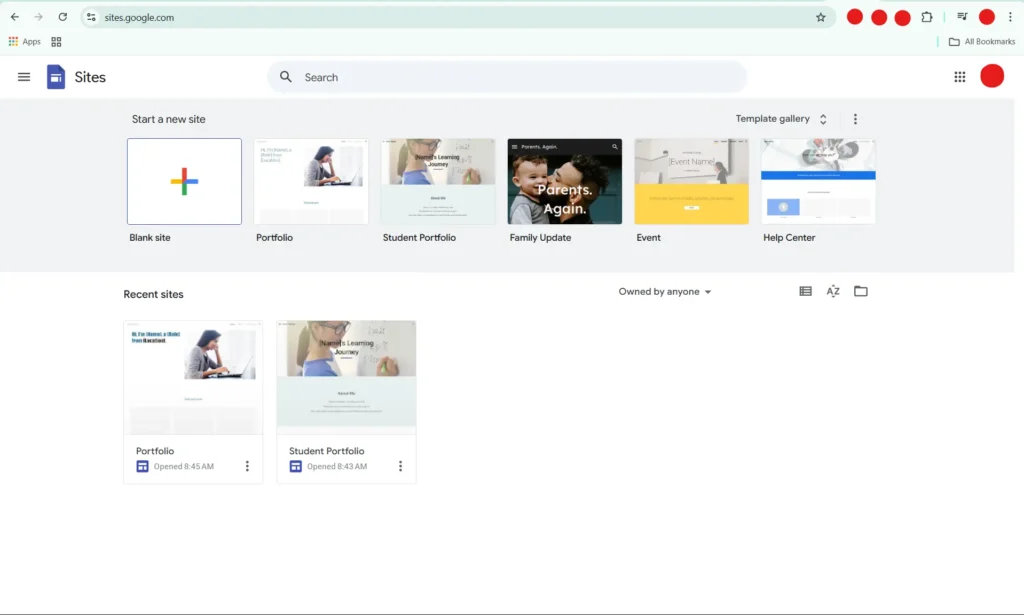
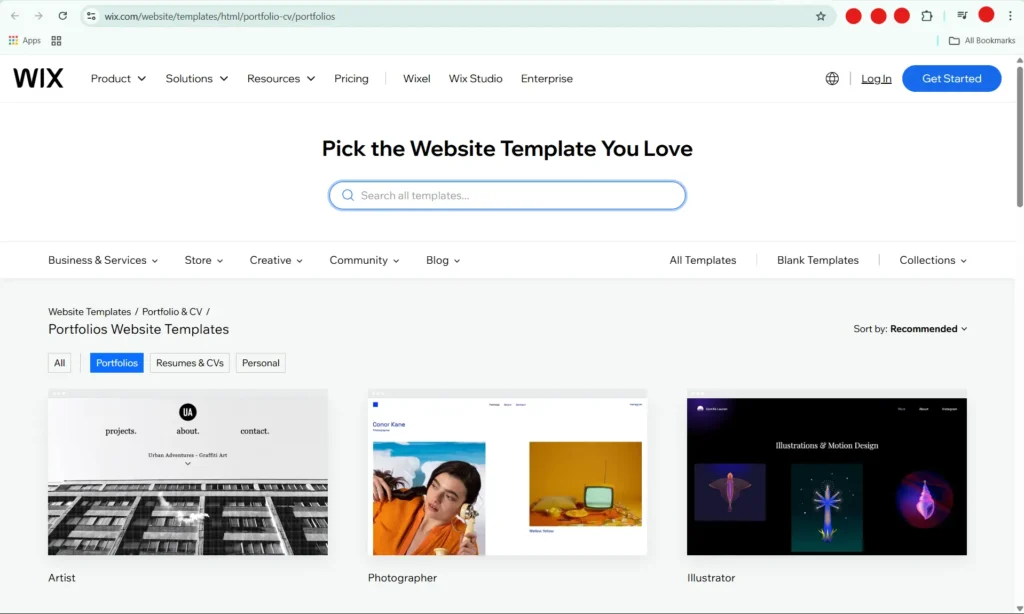
    • Free options: Google Sites (simple and beginner-friendly), Canva (drag-and-drop design), Wix (customizable templates)
    • Professional options: WordPress (flexible for long-term use), Squarespace (sleek and modern designs)

    How to start:

    1. Pick a platform based on your needs and skill level.
    2. Choose a clean, mobile-friendly template.
    3. Use your full name in your portfolio link (e.g., juandelacruzportfolio.com) para madaling mahanap ng recruiters.

    Pro Tip: 70% of recruiters check portfolios using their phones — always test if yours looks good on mobile.

    2. Include the Essential Sections

    Why it’s good:

    A professional portfolio isn’t just a photo album — it’s a professional presentation of your skills, achievements, and personality. The right sections help recruiters see your potential quickly.

    Must-have sections:

    • About Me – Short intro, career goals, and a professional photo
    • Resume / CV – Downloadable PDF so employers can keep a copy
    • Skills & Certifications – Only the most relevant to your target industry
    • Sample Works – With short descriptions of your role and results
    • Testimonials – Feedback from OJT supervisors, professors, or clients
    • Contact Info – Email, LinkedIn, and professional social links

    How to start:

    1. Write your About Me in 3–4 sentences max.
    2. Select 3–5 of your strongest works for your initial upload.
    3. Ask mentors or supervisors for short testimonials.

    Pro Tip: Always include results in your work descriptions if possible (e.g., “Reduced project delivery time by 20%”).

    Download: List of Editable Digital Professional Portfolio Templates for Fresh Grads

    3. Make It Easy to Share and Find

    Why it’s good:

    A great professional portfolio won’t help if no one sees it. Make it accessible and searchable so recruiters can find you anytime.

    How to start:

    1. Add your professional portfolio link to your resume, LinkedIn, and email signature.
    2. Use keywords that match your target role (e.g., “Social Media Marketing Portfolio Philippines”).
    3. Share updates or new works on LinkedIn to show you’re active.

    Pro Tip: Recruiters often search for portfolios using job-related keywords — optimize your text so you appear in their results.

    1. Use Quality Visuals

    • High-resolution photos of your works/projects
    • Consistent color scheme and fonts

    2. Write Clear Descriptions

    • State the problem, your role, and the result for each project
    • Use numbers if possible (e.g., “Increased engagement by 50%”)

    3. Keep It Updated

    • Replace outdated works with stronger ones
    • Add new skills and certifications as you earn them

    Week 1: Pick your platform and draft your “About Me” section

    Week 2: Upload your top 3–5 best works

    Week 3: Connect your portfolio to LinkedIn and resume

    Week 4: Share your portfolio link publicly for the first time

    Your resume tells employers who you are, pero your digital portfolio shows them what you can do.

    Kahit fresh grad ka, you can look like an experienced, professional candidate with the right presentation.

    From job seeker to job seeker — trust us, your future employer is already looking for proof. Give them something worth saying YES to.

    Join Us. Grow With Us. Ka-Komunidad Mo Kami.

    ✅ Subscribe to our Newsletter

    Stay updated with new job tips, free templates, kwentos from real KaTrabahos, and upcoming events.
    No noise. Just real help.

    Join Our Facebook Group

    Real-time conversations, questions, kwentuhan, and job alerts — kasama ang buong Komunidad.

    Submit Your Story or Tip

    Your voice might be the sign someone else is waiting for. Share your experience — it matters.
  • Experience 202 – Skills and Certificates That Help Fresh Grads Get Hired

    You’ve graduated. You have a diploma. Pero bakit parang ang hirap pa rin mag-land ng first job?

    Many fresh grads realize na kahit may degree, competition is tough.

    Employers are looking for more than just school credentials. They want proof you can do the job — and sometimes, that proof is a skill or certification.

    Today, we’ll share the top skills and certificates from TESDA, DICT, and Google that can give you a clear advantage over other applicants.

    All practical, affordable, and possible even if you’re a fresh grad.

    Why Skills and Certificates Matter for Fresh Grads

    Graduating is just the first step. Once you start applying for jobs, you’ll notice something:

    • Maraming employers ang naghahanap hindi lang ng diploma, pero may “skills” at “certifications” din.
    • Skills are what you can actually do — like designing a poster, analyzing data, or leading a team project.
    • Certifications are proof na kaya mo talaga gawin ‘yan — given by a trusted institution or training provider.

    Why it matters:

    • Proof beats promise. Kahit sabihin mong marunong ka, employers trust you more kapag may official certificate to back it up.
    • You stand out from other fresh grads. Many graduates have the same degree, pero hindi lahat may extra proof of skills.
    • It gives you confidence. Having both skills and certificates makes you feel ready to take on bigger responsibilities.

    Trust us: As recruiters ourselves, we’ve seen it happen. Kapag may TESDA NCII, DICT, o Google Career Certificate ka, mas mabilis kang napapansin sa shortlist.

    Not all certifications are expensive or hard to get. May mga options na libre o abot-kaya, and most are recognized by local and international employers. Here are 3 proven sources na puwede mong simulan kahit ngayon.

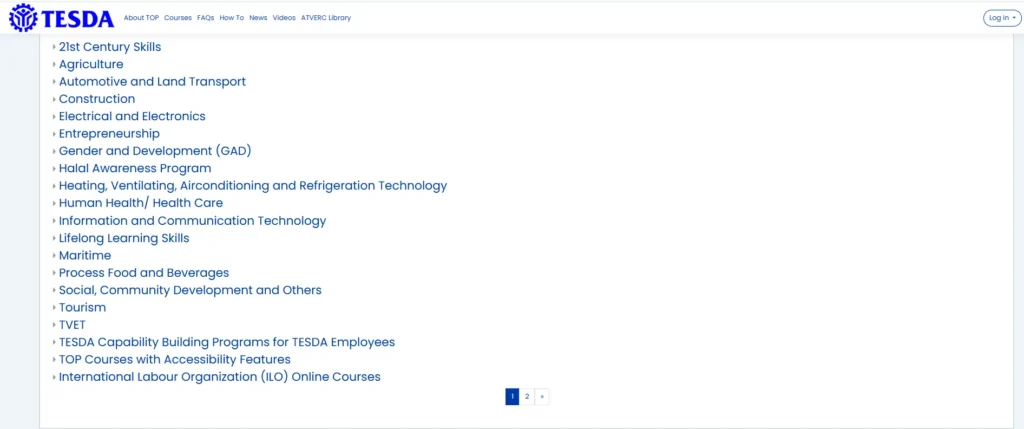
    1. TESDA (Technical Education and Skills Development Authority)

    Top Certification Sources for Fresh Grads - Experience 202 – Skills and Certificates That Help Fresh Grads Get Hired
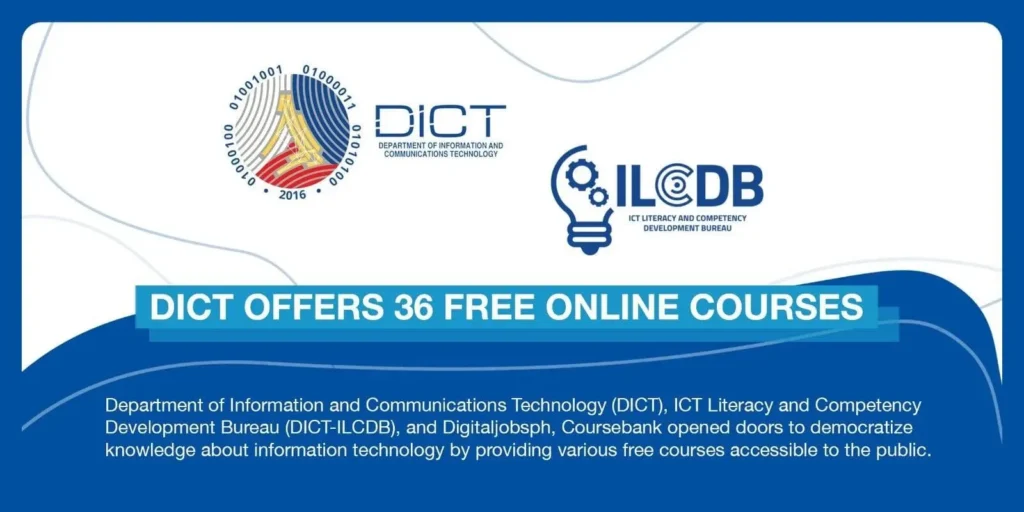
    Photo from TESDA Website

    Why it’s good:

    Government-accredited and recognized by employers here and abroad. TESDA’s National Certificates (NC) prove that you meet industry standards in a specific skill.

    Popular for fresh grads:

    • NCII in Bookkeeping
    • Web Development
    • Bread & Pastry Production
    • Caregiving

    How to start:

    1. Visit e-tesda.gov.ph
    2. Enroll in free online courses
    3. Take the competency assessment to get certified

    Pro Tip: TESDA certs are highly valued sa technical at service industries. Even if wala ka pang work experience, NCII can open doors.

    For the Guide on How to enroll in TESDA Courses you can read this article: How to Enroll in TESDA Free Online Courses | 3 Easy Steps

    2. DICT (Department of Information and Communications Technology)

    Photo from Philippine Information Agency Facebook Page

    Why it’s good:

    Perfect for the digital age — DICT offers courses on tech and online skills na in-demand ngayon. Libre lang and recognized by IT and marketing employers.

    Popular courses:

    • Digital Marketing
    • Cybersecurity
    • Data Analytics
    • E-commerce

    How to start:

    1. Go to dict.gov.ph/training (you can also follow them on their facebook page for real time update of free courses)
    2. Choose from free modules (As of this writing, there is no available online trainings modules. However, recorded videos of the previous trainings are expected to be out in DICT’s website.)
    3. Earn a digital certificate after passing the quiz

    Recruiter insight: According to an HR manager from an IT outsourcing firm, DICT-certified applicants often land entry-level tech jobs even without a tech degree.

    3. Google Career Certificates

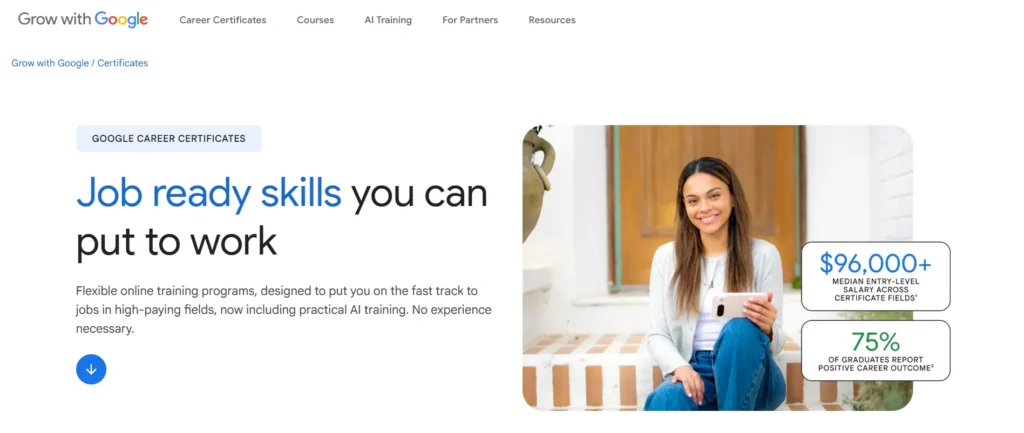
    Photo from www.grow.google/certificates/

    Why it’s good:

    Globally recognized and trusted by employers. Flexible, self-paced, and you can finish in a few months.

    Popular tracks:

    • Google IT Support
    • Project Management
    • UX Design
    • Data Analytics

    How to start:

    1. Enroll via Coursera or the Google Garage portal
    2. Complete modules at your own pace
    3. Get a shareable certificate for LinkedIn and your portfolio

    You can also see other platforms for free skills certification here:

    Getting a certificate is just step one. Ang susi para maging “job market ready” ka is knowing how to show it off the right way. Here’s how you can make the most out of your hard-earned credentials:

    1. Add Them to Your Resume

    • Place them under Skills or Certificates section.
    • Include the full course name, provider, and completion date.
    • Example: TESDA NCII – Bookkeeping, August 2025
    • Tip from recruiters: A clean, organized resume with certifications up top instantly catches attention.

    2. Upload to LinkedIn & Online Portfolio

    • Post your new certificate with a short caption: “Excited to apply my new skills in [skill name]!”
    • Employers search LinkedIn using skill and certification keywords. Mas madali kang mahanap.
    • Attach certificates to your online portfolio for proof of skill.

    3. Mention Them in Interviews

    • Use them as part of your strengths.
    • Example: “I recently completed DICT’s Digital Marketing course, so I’m confident in managing campaigns and using analytics tools.”
    • According to an HR officer we interviewed, candidates who mention certifications during interviews show initiative and readiness.

    4. Apply the Skills Immediately

    • Volunteer, do side projects, or help a small business para ma-practice mo agad ang natutunan mo.
    • This creates real experience you can add to your resume.

    Para sa bawat Pilipinong may pangarap, hindi sapat na may plano lang — kailangan may gawa agad. Here’s a simple 4-week plan para makuha mo ang first certification mo and use it to get noticed by employers.

    Week 1 – Choose Your Certification Track

    • Pick a course na aligned sa dream job mo.
    • Example: Kung gusto mo sa accounting, go for TESDA NCII Bookkeeping; kung sa marketing, try DICT Digital Marketing.
    • Recruiter tip: Specialization beats “anything goes.” Mas madali kang ma-hire kapag malinaw ang skill focus mo.

    Week 2–3 – Study and Complete the Modules

    • Commit at least 1–2 hours daily for study.
    • Take notes and save screenshots ng important lessons (puwede mo itong gamitin sa portfolio).
    • If may quiz, aim to pass on first try — pero kung di pumasa, review and retake.

    Week 4 – Get Certified and Show It Off

    • Complete the assessment and claim your certificate.
    • Upload it to LinkedIn, include it in your resume, and share it with your network.
    • Start applying to jobs immediately — fresh certifications look best when they’re recent.

    Bonus Step – Apply the Skill

    • Do a volunteer project or help a local business para ma-practice mo agad.
    • Trust us, as recruiters, mas nagiging convincing ang application kapag may real use case ng skills mo.

    Start now! Click below to grab your free 30-Day Certification Action Planner and make your own copy today.

    Your diploma opens the door, pero ang skills at certificates ang magpapanatili sa’yo sa loob.

    Kahit fresh grad ka, you have the power to stand out.

    We’ve seen it firsthand as recruiters — applicants na may TESDA, DICT, o Google Career Certificates get noticed faster. Why? Kasi may proof sila na kaya nilang gawin ang trabaho, hindi lang sa salita, kundi sa gawa.

    So start now. Pick one skill, get certified, and use it to open opportunities.

    Join Us. Grow With Us. Ka-Komunidad Mo Kami.

    ✅ Subscribe to our Newsletter

    Stay updated with new job tips, free templates, kwentos from real KaTrabahos, and upcoming events.
    No noise. Just real help.

    Join Our Facebook Group

    Real-time conversations, questions, kwentuhan, and job alerts — kasama ang buong Komunidad.

    Submit Your Story or Tip

    Your voice might be the sign someone else is waiting for. Share your experience — it matters.
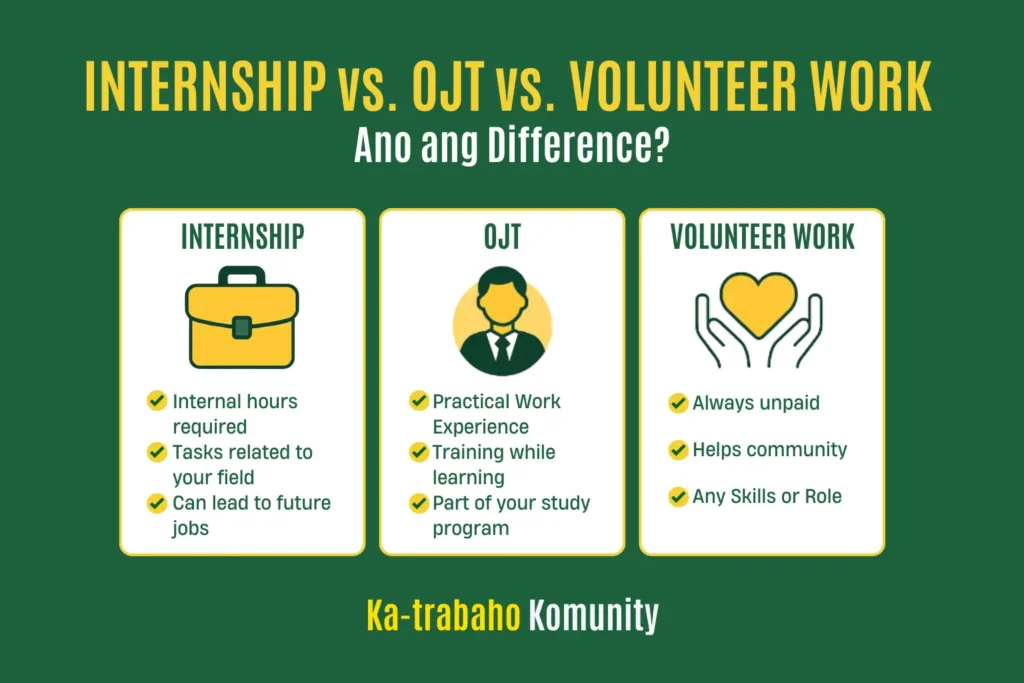
  • Experience 201 – Turning Internships, OJT, & Volunteer Work into Work Experience

    You’ve done internships, OJT, or volunteer work — But Did you know that it is counted as real work experience?

    Nakaka-doubt minsan, kasi feeling mo “It’s not a paid job, so maybe it doesn’t matter.” But the truth is, employers care about what you learned and contributed, not just your job title.

    In this episode, you’ll learn 3 simple steps to make your internships, OJT, and volunteer work into work experience and make it stand out:

    1. Identify Transferable Skills
    2. Document Your Contributions
    3. Present Them Professionally sa Resume at Interview
    Experience 201 – Turning Internships, OJT, & Volunteer Work into Work Experience

    Internships, OJT, and volunteer work are real training grounds.

    According to Indeed, job seekers often include volunteer activities on their resumes — basta related sa job na ina-applyan mo.

    Why it matters:

    • Shows initiative and willingness to learn
    • Gives you real stories to share during interviews
    • Helps you practice professional skills before a full-time role

    Why It Matters:

    Employers want to know kung anong skills ang kaya mong i-apply sa trabaho nila. Kahit unpaid, skills are skills.

    How to Do It:

    • Isulat lahat ng ginawa mo during internship, OJT, or volunteer work
    • Highlight skills like customer service, project management, data entry, event coordination
    • I-match ang skills sa requirements ng job posting

    Examples:

    • Registration sa school event → customer service experience
    • Creating reports for NGO → data management
    • Organizing barangay clean-up → teamwork & planning

    Sample Skills:

    • Communication
    • Teamwork
    • Technical proficiency (software, tools)
    • Problem-solving
    • Time management

    Did you know: Recruiters scan for skill keywords sa resume bago nila basahin lahat?

    Why It Matters:

    Kung walang proof, parang kwento lang. Documentation makes it real.

    How to Do It:

    • Mag-keep ng copies ng reports, presentations, certificates, at photos
    • Humingi ng recommendation letter or reference mula sa supervisor
    • I-track ang achievements (e.g., “Organized an event with 200+ attendees”)

    Examples:

    • Before-and-after photos ng project
    • Thank-you letter from NGO
    • Screenshot ng social media posts na ginawa mo

    Sample Documentation Items:

    • Certificates of completion
    • Photos of activities
    • Recommendation letters
    • Work samples or outputs
    • Performance evaluations

    Download: List of School or out of School Work Documentation Opportunities (Free PDF)

    Why It Matters:

    Even the best experience can be overlooked if not presented well.

    How to Do It:

    • Add a “Relevant Experience” section in your resume
    • Use bullet points to clearly show your role and achievements
    • In interviews, use the STAR method (Situation, Task, Action, Result) to tell your story

    Example Resume Entry:

    • Volunteer Event Coordinator, Barangay Fiesta 2024 – Managed a team of 5, tracked budgets, and organized activities for 300+ attendees.

    Sample Work/Industry:

    • Administrative
    • Events Management
    • Customer Service
    • Digital Marketing
    • Community Development

    In Summary:

    • Identify the skills you learned
    • Document your outputs and achievements
    • Present them clearly in your resume and interviews

    Now you see it, right? Your OJT, internship, and volunteer work can actually be just as valuable as a paid job.

    Step 1: List your past internships, OJT, and volunteer work.

    Step 2: Identify the transferable skills in each.

    Step 3: Document your best outputs and add them to your resume or portfolio.

    Your first “real” job isn’t the only thing that builds your career — every OJT, internship, and volunteer role is a stepping stone.

    Kahit maliit lang na task ang ginawa mo noon, it still counts if you know how to present it well.

    Trust us, we’ve been recruiters, and the candidates who could confidently share these experiences always stood out.

    Nakikita agad ng employers na may initiative ka, marunong kang mag-adapt, at hindi ka takot matuto.

    So start treating your past experiences as valuable assets. Begin compiling them now, dahil bawat maliit na project, bawat skill, at bawat accomplishment can open the door to bigger opportunities in the future.

    Join Us. Grow With Us. Ka-Komunidad Mo Kami.

    ✅ Subscribe to our Newsletter

    Stay updated with new job tips, free templates, kwentos from real KaTrabahos, and upcoming events.
    No noise. Just real help.

    Join Our Facebook Group

    Real-time conversations, questions, kwentuhan, and job alerts — kasama ang buong Komunidad.

    Submit Your Story or Tip

    Your voice might be the sign someone else is waiting for. Share your experience — it matters.
  • Experience 103 – How to Document Your Skills in a Portfolio

    You’ve done a lot in school, OJT, or community work — pero wala kang idea how to put it all together.

    And now you’re wondering: “Paano ko maipapakita sa employers ‘yung kaya kong gawin kung wala akong formal job experience?”

    Nakaka-frustrate, ‘di ba? but don’t worry!

    In this episode, you’ll learn 3 simple steps on how to document your skills and experiences into a portfolio that can impress employers — kahit student ka pa:

    1. Collect Your Work (School, OJT, Community)
    2. Organize & Describe It (Skills + Achievements)
    3. Present It Professionally (Printed or Digital)

    A portfolio is more than a folder of documents — it’s proof of what you can do.

    According to LinkedIn, candidates with a skills-based portfolio are 2x more likely to get shortlisted than those with just a resume.

    Benefits of having a portfolio:

    • Shows your skills visually and concretely
    • Helps you stand out kahit wala pang formal work experience
    • Gives you confidence during interviews

    Why It Matters:

    You can’t showcase what you haven’t gathered. This is your foundation.

    How to Do It:

    • From School Projects – reports, presentations, designs, research papers
    • From OJT/Internships – documents you created, tools you learned, feedback from supervisors
    • From Barangay/Community Work – event photos, certificates, letters of recognition

    What It Looks Like in Action:

    • A sample PowerPoint from a school presentation
    • A project plan you helped create for an NGO
    • A customer service feedback note from your internship supervisor

    Sample Work/Industry:

    • Education – Lesson plans, presentations
    • Marketing – Posters, social media content
    • Community Development – Event documentation, reports
    • Hospitality – Service checklists, guest feedback forms
    • IT – Website mockups, coding projects

    Did you know: Some recruiters will flip through your portfolio before even reading your resume?

    Why It Matters:

    A messy portfolio can make you look unprepared. Organizing it shows professionalism.

    How to Do It:

    • Group items by category (School, OJT, Community)
    • Add short descriptions: what the project was, your role, and the skill used
    • Highlight achievements: grades, awards, or positive feedback

    What It Looks Like in Action:

    • “Planned and led a fundraising event, raising ₱10,000 for local school”
    • “Created a Facebook content plan that reached 5,000+ people”

    Sample Work/Industry:

    • Events – Itineraries, budgets, post-event reports
    • Design – Canva/Photoshop samples
    • Admin – Spreadsheets, schedules, memos
    • Sales – Product pitch presentations
    • Nonprofit – Volunteer reports, community project summaries

    Why It Matters:

    A good portfolio isn’t just about what’s inside — it’s also about how it looks.

    How to Do It:

    • Decide format: printed binder or digital PDF/website
    • Use clean layouts and consistent fonts/colors
    • Include a title page with your name and contact details
    • For digital portfolios, use free platforms (Canva, Google Sites)

    What It Looks Like in Action:

    • A neat printed binder you can bring to interviews
    • A PDF with clickable sections
    • An online portfolio link in your resume

    Sample Work/Industry:

    • Corporate Jobs – PDF format for emailing HR
    • Creative Fields – Online portfolio with visuals
    • Freelance Work – Link to project samples
    • Education – Lesson plan binder
    • Tech – GitHub or code repository
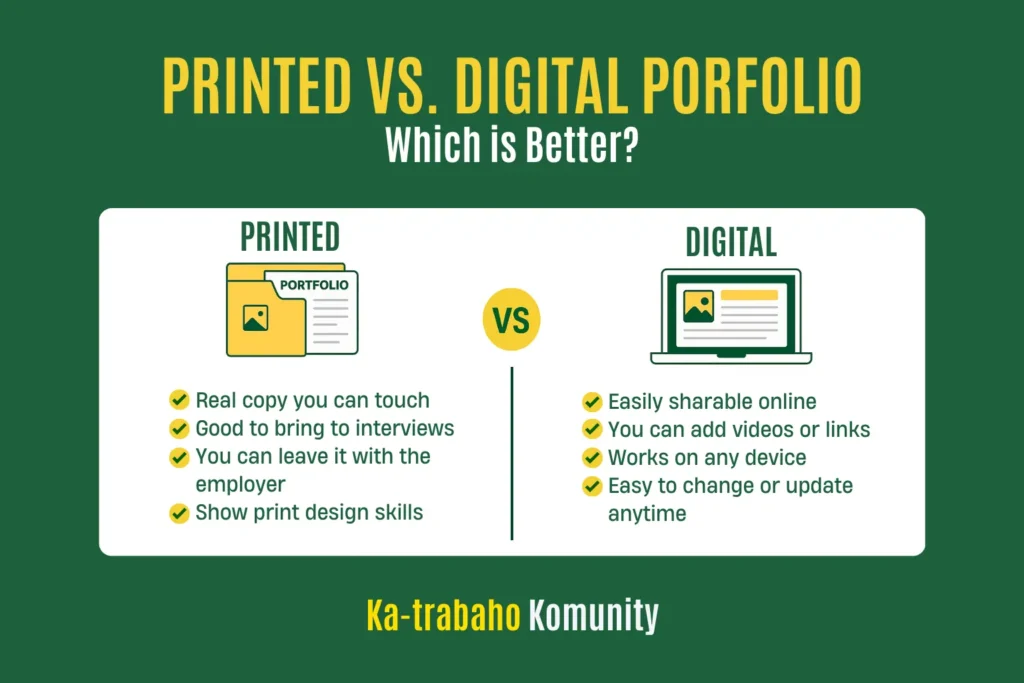
    Printed Vs. Digital Portfolio -Experience 103 – How to Document Your Skills in a Portfolio

    Step 1: List down all your past projects from school, OJT, and community work.

    Step 2: Pick the best ones and describe them clearly.

    Step 3: Arrange them in a printed or digital format.

    Download: Beginner’s Portfolio Template for Students

    Simulan mo na ang paggawa ng first professional portfolio mo — download the Beginner’s Portfolio Template for Students ngayon!

    A document of your skills is more than just a collection of papers or pictures — it’s your personal highlight reel. It’s living proof of what you can do, even if you haven’t been officially hired yet.

    Kahit school projects, OJT outputs, or barangay/community work lang ‘yan, if you know how to present them well, they can speak louder than a resume alone.

    Trust us, we’ve been on both sides of the table — as job seekers and as recruiters — and we’ve seen how portfolios can make a candidate stand out instantly.

    So don’t wait for your “first real job” before you start. Begin documenting your skills now, because every project, every skill, and every effort you’ve made can be the key that opens the door to your future career.

    Join Us. Grow With Us. Ka-Komunidad Mo Kami.

    ✅ Subscribe to our Newsletter

    Stay updated with new job tips, free templates, kwentos from real KaTrabahos, and upcoming events.
    No noise. Just real help.

    Join Our Facebook Group

    Real-time conversations, questions, kwentuhan, and job alerts — kasama ang buong Komunidad.

    Submit Your Story or Tip

    Your voice might be the sign someone else is waiting for. Share your experience — it matters.
  • Experience 102 – Gaining Hard Skills as a Student

    You keep hearing “gain more skills” pero estudyante ka pa.

    And now you’re asking yourself: “Paano ako matututo kung wala pa nga akong trabaho?”

    Nakaka-discourage ‘di ba? Parang trabaho lang ang way para matuto ng “real skills.” But don’t worry!

    In this episode, we’ll break down 3 proven ways to build hard skills while you’re still studying:

    1. Volunteering
    2. Taking Short Courses
    3. Doing Part-Time Jobs, OJT/Internships, or Freelance Gigs
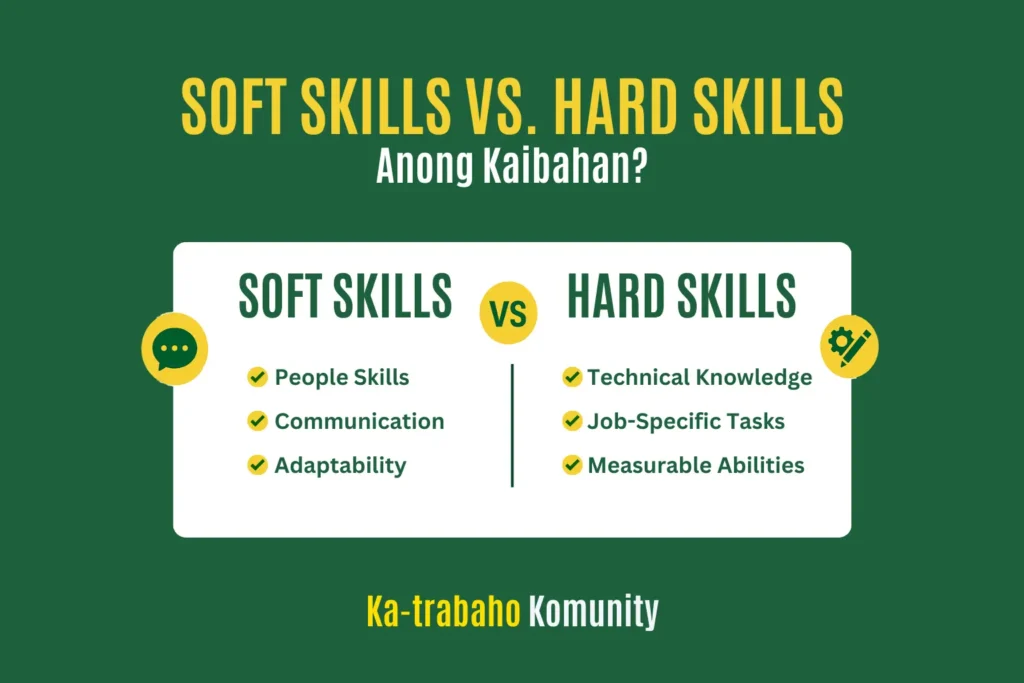
    Soft Skills vs. Hard Skills - Experience 101 – Gaining Hard Skills as a Student

    Hard skills are the technical abilities that employers can measure and test — think computer skills, graphic design, bookkeeping, coding.

    Hard skills help you:

    • Stand out sa resume kahit walang work history
    • Pass skill-based job exams
    • Apply for both local and online jobs

    Download: List of Hard Skills You Can Learn by Work Industry(Free PDF) with Tracker

    Why It Matters:

    Volunteering exposes you to real tasks without the pressure of a paid job. Many employers respect volunteer work because it shows initiative and willingness to learn.

    How to Do It:

    • Join barangay projects (event planning, documentation, admin tasks)
    • Volunteer for school events (tech booth, registration table)
    • Assist NGOs in your area (social media posting, data encoding)

    What It Looks Like in Action:

    • Learning how to handle basic administrative tools
    • Gaining event coordination skills
    • Using office software like Word, Excel, or Canva

    Sample Work/Industry:

    • Events Management – Planning and logistics
    • Administrative Support – Office tools and documentation
    • Community Organizing – Barangay and NGO projects
    • Education Assistance – Tutoring or mentoring younger students
    • Fundraising & Advocacy – Nonprofit or charity activities

    Did you know: Some employers count volunteer experience as valid work experience in the Philippines?

    Why It Matters:

    Short courses give you specialized skills in weeks, not years. According to TESDA, thousands of graduates from short programs land entry-level jobs in less than 6 months.

    How to Do It:

    • TESDA Online Program (free) – digital literacy, entrepreneurship
    • DICT Free Trainings – basic web development, cybersecurity
    • Google Digital Garage – digital marketing, data analytics

    What It Looks Like in Action:

    • Adding certificates to your resume
    • Applying learned skills to small projects or gigs
    • Building a mini-portfolio from course activities

    Sample Work/Industry:

    • Digital Marketing – Social media content creation
    • IT Support – Basic troubleshooting and software installation
    • Graphic Design – Canva or Photoshop basics
    • Bookkeeping – Basic accounting for small businesses
    • Hospitality – Food & beverage service or hotel basics

    You might also like:

    Why It Matters:

    Even small, short-term work experiences teach you hard skills faster than any classroom. According to a BPO recruiter we’ve worked with, applicants who had internships or freelance projects often adapt faster in training.

    How to Do It:

    • Apply for part-time roles in retail, food service, or admin work
    • Join your school’s OJT program or look for summer internships
    • Try freelance gigs like data entry, graphic design, or tutoring

    What It Looks Like in Action:

    • Learning point-of-sale systems in retail
    • Handling real client feedback in freelance work
    • Using industry tools during an internship

    Sample Work/Industry:

    • Retail & Sales – Cashiering, inventory management
    • Freelance Design – Canva layouts, basic editing
    • Hospitality – Front desk and customer service
    • Online Tutoring – Teaching English or other subjects remotely
    • Data Entry & Virtual Assistance – Admin tasks for clients

    Hanap ka ng extra kita o experience? Check our list of part-time, OJT, at freelance gigs para sa students!

    Step 1: Choose one method to start this month.

    Step 2: Complete at least one small project, course, or gig.

    Step 3: Document it for your portfolio or resume.

    Hard skills open doors — and you can start learning them today without spending a fortune or waiting for your first job.

    Trust us, we’ve recruited people before, and we’ve seen candidates with self-learned hard skills land jobs faster.

    Join Us. Grow With Us. Ka-Komunidad Mo Kami.

    ✅ Subscribe to our Newsletter

    Stay updated with new job tips, free templates, kwentos from real KaTrabahos, and upcoming events.
    No noise. Just real help.

    Join Our Facebook Group

    Real-time conversations, questions, kwentuhan, and job alerts — kasama ang buong Komunidad.

    Submit Your Story or Tip

    Your voice might be the sign someone else is waiting for. Share your experience — it matters.
  • Experience 101 – Gaining Soft Skills as a Student

    You want to get a job, pero wala ka pang experience. Now employers are asking for “soft skills.”

    Nakaka-pressure, ‘di ba? Lalo na kung iniisip mo na: “Hindi pa nga ako nagta-trabaho, saan ko kukunin ‘yang skills na ‘yan?”

    Pero remember, para sa bawat Pilipinong may pangarap — kasama mo ang KaTrabaho Komunity.

    In this article, we’ll show you 3 powerful skills you can develop right now: Communication, Time Management, and Teamwork — even without a job.

    Soft Skills vs. Hard Skills - Experience 101 – Gaining Soft Skills as a Student

    Soft skills are the invisible tools that help you succeed anywhere.

    According to Indeed Career Guide, employers say soft skills can sometimes matter more than your degree, especially for first-time applicants.

    They help you:

    1. Communicate well with anyone (kahit boss mo pa)
    2. Manage your time and tasks effectively
    3. Work smoothly with a colleagues

    In short, soft skills make you hirable and promotable — kahit estudyante ka pa lang.

    Download: List of Soft Skills You Can Learn by Work/Job Industry(Free PDF) with Tracker

    Why It Matters:

    Communication is the bridge between your ideas and other people’s understanding. Employers value it more than many technical skills.

    How to Build It:

    • Join school or barangay activities – Mag-volunteer sa simpleng roles tulad ng taga-announce sa event, tagapagbigay ng instructions, o tumutulong sa program flow.
    • Practice public speaking online – Mag-upload sa TikTok or FB Live kahit maliit lang audience.
    • Learn from free coursesTESDA Free Courses, Coursera, and YouTube tutorials.

    What It Looks Like in Action:

    • Explaining a project clearly to a group
    • Writing a clear, polite email
    • Presenting your ideas confidently in class

    Sample Work/Industry:

    • Customer Service (BPO) – Talking to customers clearly and calmly
    • Sales and Retail – Explaining product details to buyers
    • Events Hosting – Guiding guests and making announcements
    • Tourism and Hospitality – Assisting tourists with directions and information
    • Education and Training – Explaining lessons in simple words

    Did you know: Employers can already sense your communication skills just by the way you introduce yourself in an interview?

    Why It Matters:

    According to a BPO recruiters online, poor time management is one of the top reasons new hires fail — late sa training, missed deadlines.

    How to Build It:

    • Set personal deadlines earlier than the actual deadline.
    • Use free time-blocking tools (Google Calendar, Notion).
    • Practice balancing activities (school, hobbies, chores).

    What It Looks Like in Action:

    • Submitting projects ahead of time
    • Arriving early for meetings or events
    • Managing study time while joining extra-curriculars

    Sample Work/Industry:

    • Retail – Reporting to the store on time and arranging products before opening
    • Events Management – Arriving early to help set up booths and materials
    • Food Service – Serving orders quickly while keeping the station clean
    • Logistics/Warehousing – Preparing packages for pickup within the schedule
    • Healthcare – Assisting with patient check-ins and following appointment times

    Plan smarter, not harder — download your free Student Time Management Planner now!

    Why It Matters:

    No matter your dream job, you will work with other people. Employers want to know: kaya mo bang makisama at mag-contribute?

    How to Build It:

    • Be active in group activities – Sports, org events, school projects.
    • Learn conflict resolution – Practice listening before reacting.
    • Volunteer – Community clean-ups, fundraising events.

    What It Looks Like in Action:

    • Helping teammates finish a project ahead of schedule
    • Sharing tasks fairly
    • Supporting a teammate who’s struggling

    Sample Work/Industry:

    • Healthcare – Working with nurses, doctors, and staff
    • Construction – Coordinating with engineers and crew
    • Fast Food Service – Sharing tasks with co-workers during rush hours
    • School Organizations – Planning events together with other members
    • Community Projects – Teaming up for barangay clean-up or outreach activities

    See what skills each industry needs and track your growth — download the Soft Skills by Industry Guide and Editable Progress Tracker now!

    Step 1: Pick one skill to focus on this week.

    Step 2: Apply at least 2 tips from that skill.

    Step 3: Keep a record — para may ma-share ka sa interview later.

    Every professional started from zero.

    What made them stand out wasn’t just knowledge — it was the soft skills they built early on.

    You can do the same, kahit estudyante ka pa lang.

    Join Us. Grow With Us. Ka-Komunidad Mo Kami.

    ✅ Subscribe to our Newsletter

    Stay updated with new job tips, free templates, kwentos from real KaTrabahos, and upcoming events.
    No noise. Just real help.

    Join Our Facebook Group

    Real-time conversations, questions, kwentuhan, and job alerts — kasama ang buong Komunidad.

    Submit Your Story or Tip

    Your voice might be the sign someone else is waiting for. Share your experience — it matters.