Category: Guides for Students/ Undergraduates

  • Experience 103 – How to Document Your Skills in a Portfolio

    You’ve done a lot in school, OJT, or community work — pero wala kang idea how to put it all together.

    And now you’re wondering: “Paano ko maipapakita sa employers ‘yung kaya kong gawin kung wala akong formal job experience?”

    Nakaka-frustrate, ‘di ba? but don’t worry!

    In this episode, you’ll learn 3 simple steps on how to document your skills and experiences into a portfolio that can impress employers — kahit student ka pa:

    1. Collect Your Work (School, OJT, Community)
    2. Organize & Describe It (Skills + Achievements)
    3. Present It Professionally (Printed or Digital)

    A portfolio is more than a folder of documents — it’s proof of what you can do.

    According to LinkedIn, candidates with a skills-based portfolio are 2x more likely to get shortlisted than those with just a resume.

    Benefits of having a portfolio:

    • Shows your skills visually and concretely
    • Helps you stand out kahit wala pang formal work experience
    • Gives you confidence during interviews

    Why It Matters:

    You can’t showcase what you haven’t gathered. This is your foundation.

    How to Do It:

    • From School Projects – reports, presentations, designs, research papers
    • From OJT/Internships – documents you created, tools you learned, feedback from supervisors
    • From Barangay/Community Work – event photos, certificates, letters of recognition

    What It Looks Like in Action:

    • A sample PowerPoint from a school presentation
    • A project plan you helped create for an NGO
    • A customer service feedback note from your internship supervisor

    Sample Work/Industry:

    • Education – Lesson plans, presentations
    • Marketing – Posters, social media content
    • Community Development – Event documentation, reports
    • Hospitality – Service checklists, guest feedback forms
    • IT – Website mockups, coding projects

    Did you know: Some recruiters will flip through your portfolio before even reading your resume?

    Why It Matters:

    A messy portfolio can make you look unprepared. Organizing it shows professionalism.

    How to Do It:

    • Group items by category (School, OJT, Community)
    • Add short descriptions: what the project was, your role, and the skill used
    • Highlight achievements: grades, awards, or positive feedback

    What It Looks Like in Action:

    • “Planned and led a fundraising event, raising ₱10,000 for local school”
    • “Created a Facebook content plan that reached 5,000+ people”

    Sample Work/Industry:

    • Events – Itineraries, budgets, post-event reports
    • Design – Canva/Photoshop samples
    • Admin – Spreadsheets, schedules, memos
    • Sales – Product pitch presentations
    • Nonprofit – Volunteer reports, community project summaries

    Why It Matters:

    A good portfolio isn’t just about what’s inside — it’s also about how it looks.

    How to Do It:

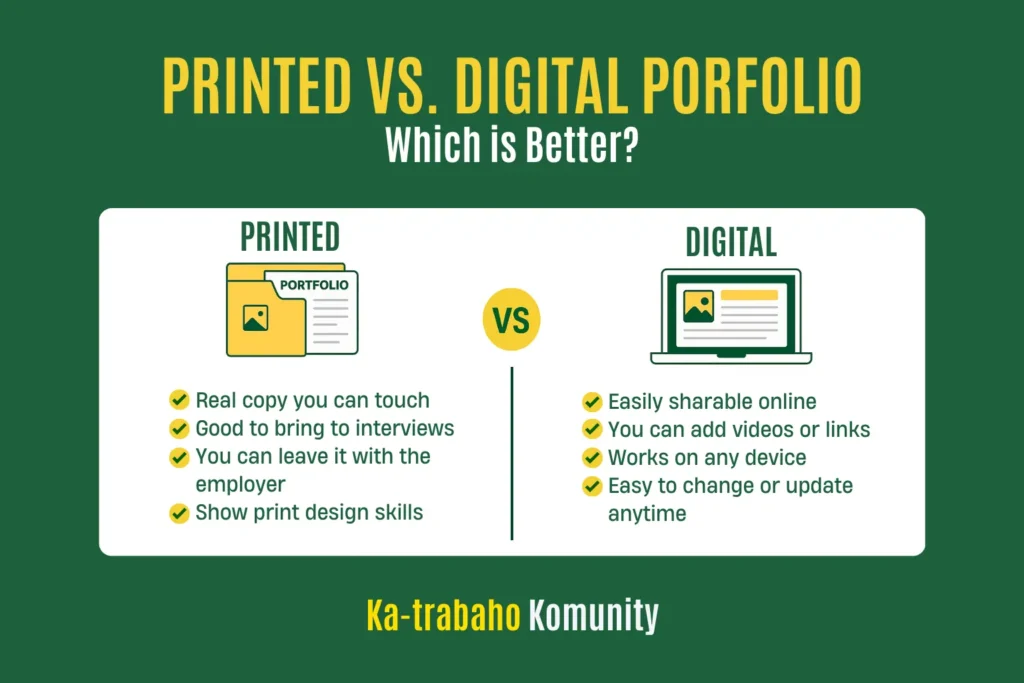
    • Decide format: printed binder or digital PDF/website
    • Use clean layouts and consistent fonts/colors
    • Include a title page with your name and contact details
    • For digital portfolios, use free platforms (Canva, Google Sites)

    What It Looks Like in Action:

    • A neat printed binder you can bring to interviews
    • A PDF with clickable sections
    • An online portfolio link in your resume

    Sample Work/Industry:

    • Corporate Jobs – PDF format for emailing HR
    • Creative Fields – Online portfolio with visuals
    • Freelance Work – Link to project samples
    • Education – Lesson plan binder
    • Tech – GitHub or code repository
    Printed Vs. Digital Portfolio -Experience 103 – How to Document Your Skills in a Portfolio

    Step 1: List down all your past projects from school, OJT, and community work.

    Step 2: Pick the best ones and describe them clearly.

    Step 3: Arrange them in a printed or digital format.

    Download: Beginner’s Portfolio Template for Students

    Simulan mo na ang paggawa ng first professional portfolio mo — download the Beginner’s Portfolio Template for Students ngayon!

    A document of your skills is more than just a collection of papers or pictures — it’s your personal highlight reel. It’s living proof of what you can do, even if you haven’t been officially hired yet.

    Kahit school projects, OJT outputs, or barangay/community work lang ‘yan, if you know how to present them well, they can speak louder than a resume alone.

    Trust us, we’ve been on both sides of the table — as job seekers and as recruiters — and we’ve seen how portfolios can make a candidate stand out instantly.

    So don’t wait for your “first real job” before you start. Begin documenting your skills now, because every project, every skill, and every effort you’ve made can be the key that opens the door to your future career.

    Join Us. Grow With Us. Ka-Komunidad Mo Kami.

    ✅ Subscribe to our Newsletter

    Stay updated with new job tips, free templates, kwentos from real KaTrabahos, and upcoming events.
    No noise. Just real help.

    Join Our Facebook Group

    Real-time conversations, questions, kwentuhan, and job alerts — kasama ang buong Komunidad.

    Submit Your Story or Tip

    Your voice might be the sign someone else is waiting for. Share your experience — it matters.
  • Experience 102 – Gaining Hard Skills as a Student

    You keep hearing “gain more skills” pero estudyante ka pa.

    And now you’re asking yourself: “Paano ako matututo kung wala pa nga akong trabaho?”

    Nakaka-discourage ‘di ba? Parang trabaho lang ang way para matuto ng “real skills.” But don’t worry!

    In this episode, we’ll break down 3 proven ways to build hard skills while you’re still studying:

    1. Volunteering
    2. Taking Short Courses
    3. Doing Part-Time Jobs, OJT/Internships, or Freelance Gigs
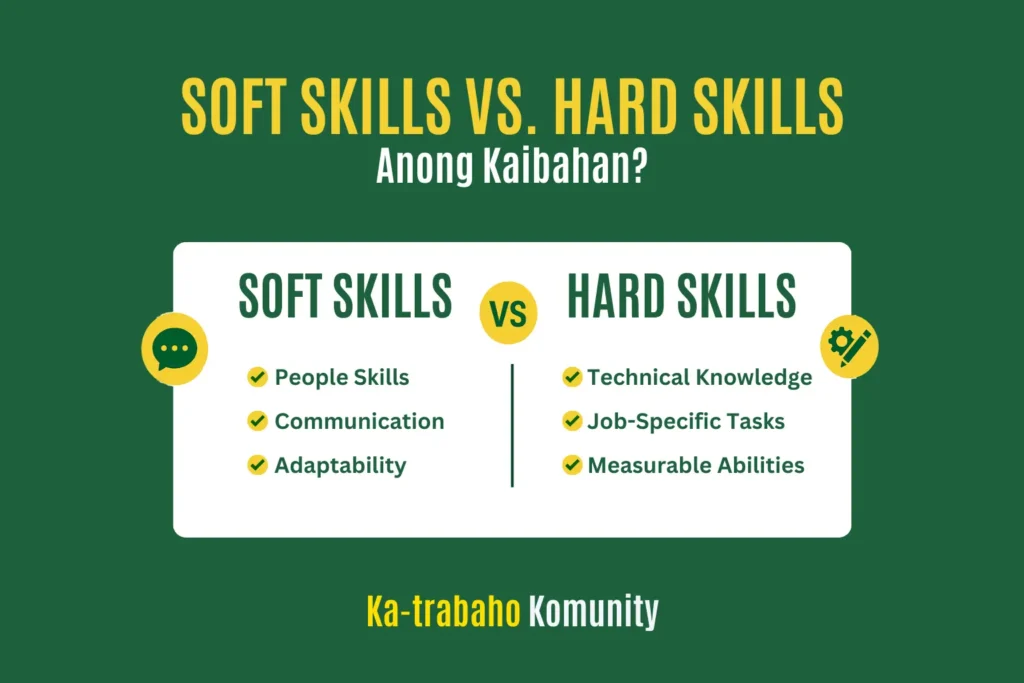
    Soft Skills vs. Hard Skills - Experience 101 – Gaining Hard Skills as a Student

    Hard skills are the technical abilities that employers can measure and test — think computer skills, graphic design, bookkeeping, coding.

    Hard skills help you:

    • Stand out sa resume kahit walang work history
    • Pass skill-based job exams
    • Apply for both local and online jobs

    Download: List of Hard Skills You Can Learn by Work Industry(Free PDF) with Tracker

    Why It Matters:

    Volunteering exposes you to real tasks without the pressure of a paid job. Many employers respect volunteer work because it shows initiative and willingness to learn.

    How to Do It:

    • Join barangay projects (event planning, documentation, admin tasks)
    • Volunteer for school events (tech booth, registration table)
    • Assist NGOs in your area (social media posting, data encoding)

    What It Looks Like in Action:

    • Learning how to handle basic administrative tools
    • Gaining event coordination skills
    • Using office software like Word, Excel, or Canva

    Sample Work/Industry:

    • Events Management – Planning and logistics
    • Administrative Support – Office tools and documentation
    • Community Organizing – Barangay and NGO projects
    • Education Assistance – Tutoring or mentoring younger students
    • Fundraising & Advocacy – Nonprofit or charity activities

    Did you know: Some employers count volunteer experience as valid work experience in the Philippines?

    Why It Matters:

    Short courses give you specialized skills in weeks, not years. According to TESDA, thousands of graduates from short programs land entry-level jobs in less than 6 months.

    How to Do It:

    • TESDA Online Program (free) – digital literacy, entrepreneurship
    • DICT Free Trainings – basic web development, cybersecurity
    • Google Digital Garage – digital marketing, data analytics

    What It Looks Like in Action:

    • Adding certificates to your resume
    • Applying learned skills to small projects or gigs
    • Building a mini-portfolio from course activities

    Sample Work/Industry:

    • Digital Marketing – Social media content creation
    • IT Support – Basic troubleshooting and software installation
    • Graphic Design – Canva or Photoshop basics
    • Bookkeeping – Basic accounting for small businesses
    • Hospitality – Food & beverage service or hotel basics

    You might also like:

    Why It Matters:

    Even small, short-term work experiences teach you hard skills faster than any classroom. According to a BPO recruiter we’ve worked with, applicants who had internships or freelance projects often adapt faster in training.

    How to Do It:

    • Apply for part-time roles in retail, food service, or admin work
    • Join your school’s OJT program or look for summer internships
    • Try freelance gigs like data entry, graphic design, or tutoring

    What It Looks Like in Action:

    • Learning point-of-sale systems in retail
    • Handling real client feedback in freelance work
    • Using industry tools during an internship

    Sample Work/Industry:

    • Retail & Sales – Cashiering, inventory management
    • Freelance Design – Canva layouts, basic editing
    • Hospitality – Front desk and customer service
    • Online Tutoring – Teaching English or other subjects remotely
    • Data Entry & Virtual Assistance – Admin tasks for clients

    Hanap ka ng extra kita o experience? Check our list of part-time, OJT, at freelance gigs para sa students!

    Step 1: Choose one method to start this month.

    Step 2: Complete at least one small project, course, or gig.

    Step 3: Document it for your portfolio or resume.

    Hard skills open doors — and you can start learning them today without spending a fortune or waiting for your first job.

    Trust us, we’ve recruited people before, and we’ve seen candidates with self-learned hard skills land jobs faster.

    Join Us. Grow With Us. Ka-Komunidad Mo Kami.

    ✅ Subscribe to our Newsletter

    Stay updated with new job tips, free templates, kwentos from real KaTrabahos, and upcoming events.
    No noise. Just real help.

    Join Our Facebook Group

    Real-time conversations, questions, kwentuhan, and job alerts — kasama ang buong Komunidad.

    Submit Your Story or Tip

    Your voice might be the sign someone else is waiting for. Share your experience — it matters.

  • Experience 101 – Gaining Soft Skills as a Student

    You want to get a job, pero wala ka pang experience. Now employers are asking for “soft skills.”

    Nakaka-pressure, ‘di ba? Lalo na kung iniisip mo na: “Hindi pa nga ako nagta-trabaho, saan ko kukunin ‘yang skills na ‘yan?”

    Pero remember, para sa bawat Pilipinong may pangarap — kasama mo ang KaTrabaho Komunity.

    In this article, we’ll show you 3 powerful skills you can develop right now: Communication, Time Management, and Teamwork — even without a job.

    Soft Skills vs. Hard Skills - Experience 101 – Gaining Soft Skills as a Student

    Soft skills are the invisible tools that help you succeed anywhere.

    According to Indeed Career Guide, employers say soft skills can sometimes matter more than your degree, especially for first-time applicants.

    They help you:

    1. Communicate well with anyone (kahit boss mo pa)
    2. Manage your time and tasks effectively
    3. Work smoothly with a colleagues

    In short, soft skills make you hirable and promotable — kahit estudyante ka pa lang.

    Download: List of Soft Skills You Can Learn by Work/Job Industry(Free PDF) with Tracker

    Why It Matters:

    Communication is the bridge between your ideas and other people’s understanding. Employers value it more than many technical skills.

    How to Build It:

    • Join school or barangay activities – Mag-volunteer sa simpleng roles tulad ng taga-announce sa event, tagapagbigay ng instructions, o tumutulong sa program flow.
    • Practice public speaking online – Mag-upload sa TikTok or FB Live kahit maliit lang audience.
    • Learn from free coursesTESDA Free Courses, Coursera, and YouTube tutorials.

    What It Looks Like in Action:

    • Explaining a project clearly to a group
    • Writing a clear, polite email
    • Presenting your ideas confidently in class

    Sample Work/Industry:

    • Customer Service (BPO) – Talking to customers clearly and calmly
    • Sales and Retail – Explaining product details to buyers
    • Events Hosting – Guiding guests and making announcements
    • Tourism and Hospitality – Assisting tourists with directions and information
    • Education and Training – Explaining lessons in simple words

    Did you know: Employers can already sense your communication skills just by the way you introduce yourself in an interview?

    Why It Matters:

    According to a BPO recruiters online, poor time management is one of the top reasons new hires fail — late sa training, missed deadlines.

    How to Build It:

    • Set personal deadlines earlier than the actual deadline.
    • Use free time-blocking tools (Google Calendar, Notion).
    • Practice balancing activities (school, hobbies, chores).

    What It Looks Like in Action:

    • Submitting projects ahead of time
    • Arriving early for meetings or events
    • Managing study time while joining extra-curriculars

    Sample Work/Industry:

    • Retail – Reporting to the store on time and arranging products before opening
    • Events Management – Arriving early to help set up booths and materials
    • Food Service – Serving orders quickly while keeping the station clean
    • Logistics/Warehousing – Preparing packages for pickup within the schedule
    • Healthcare – Assisting with patient check-ins and following appointment times

    Plan smarter, not harder — download your free Student Time Management Planner now!

    Why It Matters:

    No matter your dream job, you will work with other people. Employers want to know: kaya mo bang makisama at mag-contribute?

    How to Build It:

    • Be active in group activities – Sports, org events, school projects.
    • Learn conflict resolution – Practice listening before reacting.
    • Volunteer – Community clean-ups, fundraising events.

    What It Looks Like in Action:

    • Helping teammates finish a project ahead of schedule
    • Sharing tasks fairly
    • Supporting a teammate who’s struggling

    Sample Work/Industry:

    • Healthcare – Working with nurses, doctors, and staff
    • Construction – Coordinating with engineers and crew
    • Fast Food Service – Sharing tasks with co-workers during rush hours
    • School Organizations – Planning events together with other members
    • Community Projects – Teaming up for barangay clean-up or outreach activities

    See what skills each industry needs and track your growth — download the Soft Skills by Industry Guide and Editable Progress Tracker now!

    Step 1: Pick one skill to focus on this week.

    Step 2: Apply at least 2 tips from that skill.

    Step 3: Keep a record — para may ma-share ka sa interview later.

    Every professional started from zero.

    What made them stand out wasn’t just knowledge — it was the soft skills they built early on.

    You can do the same, kahit estudyante ka pa lang.

    Join Us. Grow With Us. Ka-Komunidad Mo Kami.

    ✅ Subscribe to our Newsletter

    Stay updated with new job tips, free templates, kwentos from real KaTrabahos, and upcoming events.
    No noise. Just real help.

    Join Our Facebook Group

    Real-time conversations, questions, kwentuhan, and job alerts — kasama ang buong Komunidad.

    Submit Your Story or Tip

    Your voice might be the sign someone else is waiting for. Share your experience — it matters.